Panhwar Quits Reserved Seats Case

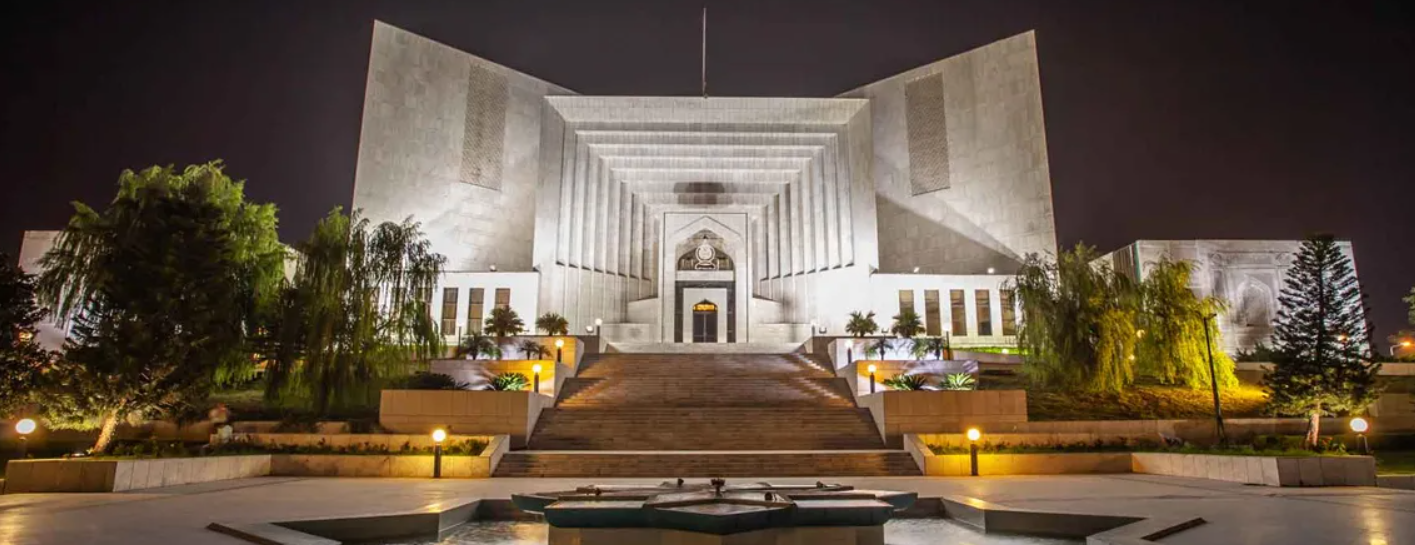
Justice Panhwar Steps Down from Reserved Seats Case
Justice Panhwar said he wanted to review his earlier short decision before leaving the case.
A group of 11 judges, led by Justice Aminuddin Khan, continued the hearing when Justice Panhwar responded to an objection made by lawyer Hamid Khan, who represents the Sunni Ittehad Council (SIC).
Hamid Khan had raised concerns about some judges who joined the Supreme Court after the 26th Constitutional Amendment, suggesting they might not be neutral. Justice Panhwar said he was one of the judges mentioned in the objection.
He said it was very important that people trust the courts, and no party should have doubts about the judges. Because of this, he decided to step down, saying, “Due to these objections, I cannot remain on this bench.”
He also said he felt personally disappointed because he had known Hamid Khan professionally since 2010. But he made it clear that his decision was not personal.
Hamid Khan welcomed Justice Panhwar’s decision. But Justice Aminuddin Khan, who looked upset, said this was not something to celebrate, especially since another SIC lawyer was still giving arguments.
Justice Jamal Mandokhel also criticized Hamid Khan’s behavior, saying, “This is happening because of how you behaved. You shouldn’t even be arguing in this case.” Hamid Khan, however, defended his right to speak.
Later, Hamid Khan raised another issue. He said the current 10-judge bench could not hear the case because the original ruling came from a 13-judge bench. He argued that at least 12 judges were needed for the review.
But the judges rejected this objection. Justice Mandokhel said they would continue hearing all 12 applications in the case.
What Is the Reserved Seats Issue?
After the February 8 elections, over 80 independent candidates supported by the Pakistan Tehreek-e-Insaf (PTI) won. The SIC asked the Election Commission of Pakistan (ECP) on February 21 to give them reserved seats (for women and minorities).
But the ECP refused on March 4, saying PTI didn’t submit its list of candidates in time. Because of this, the ECP gave the reserved seats to other political parties.
The PTI-backed SIC then went to court against the ECP’s decision. The Peshawar High Court agreed with the ECP, so the SIC appealed to the Supreme Court.
On July 12, the Supreme Court ruled that PTI had the right to get reserved seats, going against the ECP’s earlier decision. This decision was later confirmed in a detailed written judgment.
Clarification from the Supreme Court
On October 18, the Supreme Court again made it clear that changes to the Election Act could not cancel the July 12 decision.
The judges said: “The Election Commission must follow the Supreme Court’s decisions.”
Mutib Khalid is a skilled content writer and digital marketer with a knack for crafting compelling narratives and optimizing digital strategies. Excel in creating engaging content that drives results and enhances online presence. Passionate about blending creativity with data-driven approaches, Mutib Khalid helps brands connect with their audience and achieve their goals.