Pakistan Floods 2025 800 Dead Millions Affected

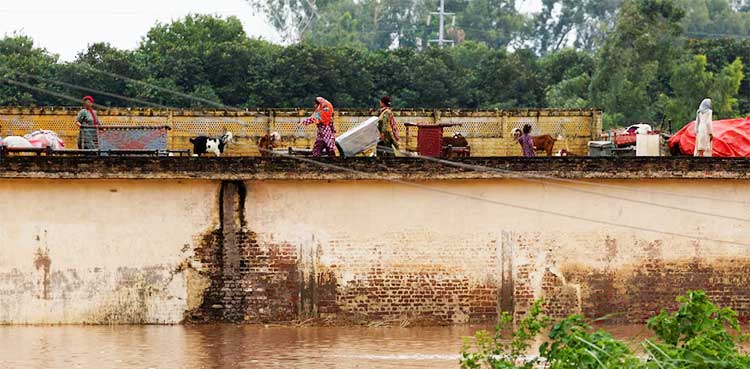
Pakistan Battles Worst Floods in Decades, Over 800 Dead and Millions Displaced
LAHORE – August 2025: Pakistan is reeling from one of the deadliest flood disasters in its history as relentless monsoon rains, glacial lake outbursts, and cross-border water releases have combined to create a catastrophe. More than 800 people have died, while over 1.2 million have been affected nationwide. Economic losses are feared to cross $50 billion, deepening the country’s financial woes.
Rivers Overflow, Danger Ahead
According to the Provincial Disaster Management Authority (PDMA), water levels are reaching alarming highs. Over 175,000 cusecs of water are currently passing through Head Marala, while 145,000 cusecs have been recorded at Trimmu Headworks. Authorities warn that a massive flood wave exceeding 800,000 cusecs could strike Head Trimmu within 24 hours.
Floodwaters are surging through Punjab’s major rivers — Chenab, Sutlej, and Ravi — leading to evacuations in hundreds of villages. Sindh is also bracing for the impact, with Chief Minister Murad Ali Shah confirming that up to 11 lakh cusecs of water may enter the province, potentially creating a “super flood.”
Human Suffering in Relief Camps
The floods have displaced nearly 250,000 people, many of whom are sheltering in makeshift camps. In Lahore’s outskirts, classrooms and tents have turned into emergency shelters. Conditions are dire, especially for women.
At a relief camp in Chuhang, pregnant women and young mothers struggle without access to proper medical care, sanitary products, or clean water.
Shumaila Riaz, 19, seven months pregnant, said: “I wanted to think about my child, but now I’m not even sure about my own future.”
Fatima, 19, also expecting, added: “I used to eat, sleep, and walk as I pleased. That is all gone now.”
Doctors warn of rising cases of infections, waterborne diseases, and psychological trauma, especially among women and children.
In Wazirabad, tragedy struck when a mother lost her newborn triplets after being unable to reach a hospital due to floodwaters.
Government Response and Relief Efforts
Punjab Chief Minister Maryam Nawaz and senior officials are overseeing a large-scale rescue operation. More than 481,000 people and 405,000 livestock have been relocated to safer areas. Relief camps are providing food, medical aid, and temporary shelter, while the Pakistan Telecommunication Authority (PTA) has introduced free call minutes in flood-hit areas to help people stay connected.
In Sindh, the PDMA has placed the Guddu and Sukkur barrages on high alert, with thousands of tents, blankets, and rescue boats stockpiled. Over 192 boats have been mobilized for evacuations.
Causes: Climate Change and Cross-Border Tensions
Experts say the disaster is a result of climate change, poor planning, and water mismanagement.
Monsoon rains, intensified by 15% due to global warming, have overwhelmed river systems.
Glacial melt in Gilgit-Baltistan has triggered dangerous lake outbursts, including a 7-km-long lake in Ghizer district.
Officials accuse India of worsening the crisis by releasing water from Salal and Thein dams without timely notice, in violation of the Indus Waters Treaty.
Economic Fallout
The destruction of crops, livestock, and infrastructure has sent vegetable prices skyrocketing and threatens food security. The estimated $50 billion in losses could surpass even the 2022 floods, which caused $30 billion in damage. Pakistan’s fragile economy, already under pressure from inflation and a weak rupee, faces another devastating blow.
Looking Ahead
With forecasts predicting more rainfall in upper catchments, authorities warn that the crisis is far from over. Experts urge Pakistan to invest in climate-resilient infrastructure, strengthen river embankments, and seek international climate finance to prepare for future disasters.
As families wait for floodwaters to recede, the human cost of Pakistan’s climate vulnerability is becoming painfully clear.
Mutib Khalid is a skilled content writer and digital marketer with a knack for crafting compelling narratives and optimizing digital strategies. Excel in creating engaging content that drives results and enhances online presence. Passionate about blending creativity with data-driven approaches, Mutib Khalid helps brands connect with their audience and achieve their goals.