Pakistan’s J-10C Shoots Down Indian Rafale in Historic Air Battle

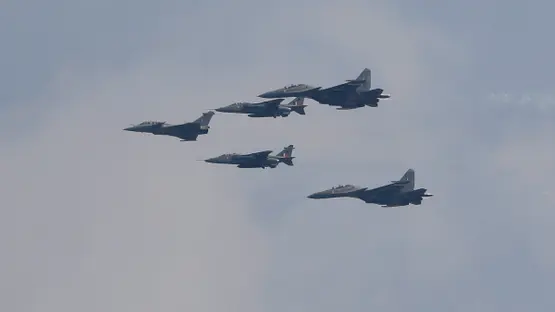
Pakistan J-10 Fighter Downs Indian Rafale in Biggest Air Battle in Decades
ISLAMABAD – A secret air battle between Pakistan and India earlier this year has caught the world’s attention, after a Chinese-made Pakistani jet shot down an advanced Indian Rafale fighter, according to U.S. and regional officials.
The dogfight, which happened in May, involved over 100 aircraft and is being called the largest air battle in decades. It took place at night, and most planes stayed within their own countries’ airspace.
Surprise Attack and Missile Power
Air Chief Marshal Zaheer Sidhu of Pakistan had been staying close to the operations room for days, expecting a possible Indian attack. When the conflict started, he ordered the J-10C fighter jets, made in China, to launch.
Sidhu reportedly told his team to target India’s most powerful fighter, the Rafale, which had never been shot down before in any war.
One Rafale was hit by a PL-15 missile from over 200 kilometers away, catching the Indian pilots off guard. The missile’s longer-than-expected range was a surprise to Indian intelligence. They thought the PL-15 could only strike within 150 km.
“We ambushed them,” a senior Pakistani Air Force (PAF) officer said. He added that Pakistan used electronic warfare to jam Indian systems and confuse their pilots.
Pakistan’s “Kill Chain” System
Pakistan had connected its air, land, and space sensors using a network called a “kill chain.” This helped its jets see the battlefield more clearly. A special Data Link 17 system connected Chinese jets with Swedish radar planes, giving Pakistani pilots live radar information without turning on their radars.
Experts say this technology helped Pakistan stay hidden and strike with precision. India is still building a similar network, but faces challenges because it buys weapons from many different countries.
Rafale Loss and India’s Response
India has not confirmed that a Rafale was shot down. But top French officials, including the French air chief and Dassault executives (the company that makes Rafales), have said one was likely lost.
Indian officials say the Rafale loss was due to bad intelligence and limitations on how far their air force could strike. They claimed political leaders told them not to target Pakistan’s military directly.
After the first fight, India changed its tactics. It launched strikes on nine Pakistani air bases and radar sites and used its BrahMos cruise missiles effectively, damaging Pakistan’s air defense and even hitting a surveillance plane.
China’s Role and Global Impact
India later accused Pakistan of getting “live inputs” from China during the battles, like radar or satellite feeds. Pakistan denied this. China’s foreign ministry said its military cooperation is “normal” and “not against any third party.”
In July, China’s air force chief visited Pakistan to study how the J-10C and PL-15 missiles were used. Chinese officials expressed interest in learning from Pakistan’s “multi-domain operations.”
Meanwhile, countries like Indonesia, which had ordered Rafales, are now considering buying the J-10, giving China a major boost in arms sales.
Mutib Khalid is a skilled content writer and digital marketer with a knack for crafting compelling narratives and optimizing digital strategies. Excel in creating engaging content that drives results and enhances online presence. Passionate about blending creativity with data-driven approaches, Mutib Khalid helps brands connect with their audience and achieve their goals.