US Jobs Slowdown Hiring Slows Openings Drop Layoffs Remain Low

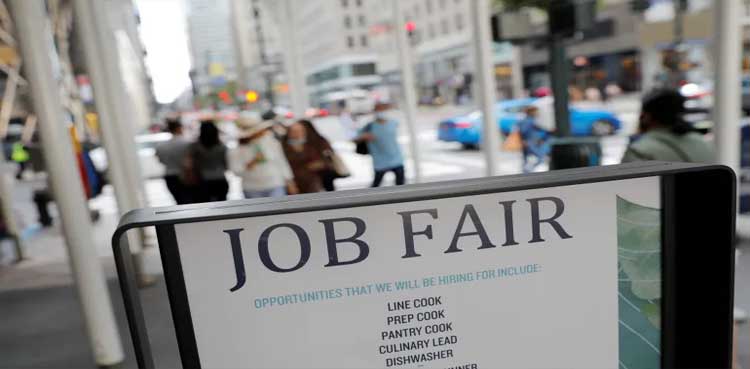
U.S. Job Market Shows Signs of Cooling Amid Slower Hiring and Fewer Openings
Despite a slowdown in hiring, layoffs in the U.S. remained relatively low, according to a Labor Department report released Wednesday.
The report also showed that fewer workers are switching jobs. There were 0.99 job openings for every unemployed person in July, down from 1.05 in June—the first time this ratio fell below 1.0 since April 2021, when the economy was recovering from the pandemic slump.
Economists say the labor market has cooled partly due to President Donald Trump’s sweeping import tariffs. The labor supply has also shrunk amid the administration’s stricter immigration policies.
The Federal Reserve’s recent “Beige Book” report echoed this trend, noting an “increase in the number of people looking for jobs” in most districts by late August.
“The slowdown highlights a gradual weakening in what has been a generally healthy labor market,” said Sarah House, senior economist at Wells Fargo. “Even though uncertainty around economic policy has eased since spring, slower consumer spending and tariff-related costs are likely to keep businesses cautious, including in their hiring decisions.”
Fewer Job Openings
Job openings, a key measure of labor demand, fell by 176,000 to 7.181 million by the end of July, the Bureau of Labor Statistics reported in its JOLTS survey. This is the lowest level since September 2024, with openings dropping over 300,000 in the past two months. Economists had expected 7.378 million unfilled positions.
The healthcare and social assistance sector, a major driver of recent employment gains, saw a drop of 181,000 openings—the second consecutive monthly decline. Retail vacancies fell by 110,000, and arts, entertainment, and recreation jobs decreased by 62,000. Professional and business services openings dropped by 56,000.
On the flip side, openings rose in construction, manufacturing, financial services, and federal government jobs, the latter likely linked to immigration enforcement hiring. The overall job openings rate fell slightly to 4.3% from 4.4% in June.
Hiring Remains Tepid
Hiring grew by just 41,000 to 5.308 million, with gains mostly in wholesale trade, manufacturing, and other services. Meanwhile, employment fell in leisure and hospitality, transportation and utilities, and healthcare. The hiring rate held steady at 3.3%.
The Fed’s Beige Book noted that “firms were hesitant to hire workers because of weaker demand or uncertainty.”
Layoffs Low, But Rising in Some Sectors
Layoffs rose modestly by 12,000 to 1.808 million, mainly in construction, while professional and business services saw a 130,000 decline. The overall layoff rate remained steady at 1.1%, anchoring the labor market despite slower hiring.
Economists expect the government’s August employment report, due Friday, to show nonfarm payrolls rising by 75,000, following a 73,000 increase in July. Employment gains have averaged 35,000 per month over the past three months, far below the 123,000 monthly average during the same period last year. The unemployment rate is projected to tick up to 4.3% from 4.2%.
Fed Watching Closely
Federal Reserve Chair Jerome Powell has signaled a potential rate cut at the September 16-17 meeting, citing rising labor market risks, though inflation remains a concern. The Fed’s benchmark interest rate has been steady at 4.25%-4.50% since December, and markets are expecting a possible cut later this month.
Some economists argue the labor market is still holding up well, noting that the decline in job openings is mostly limited to healthcare and social assistance.
“While this report may be highlighted by those advocating for a rate cut, it’s not a sign of a weak labor market,” said Conrad DeQuadros, senior economic advisor at Brean Capital.
Workers Hold Back
The number of people quitting jobs stayed low, keeping the quits rate at 2.0% for the fourth straight month. In July, 3.2 million workers quit—a sign of reduced confidence in the labor market and moderate wage growth.
“Job seekers have lost the bargaining power they had right after the pandemic,” said Allison Shrivastava, economist at Indeed. “With inflation still a concern, many workers may struggle to keep their paychecks ahead of rising costs.”
Mutib Khalid is a skilled content writer and digital marketer with a knack for crafting compelling narratives and optimizing digital strategies. Excel in creating engaging content that drives results and enhances online presence. Passionate about blending creativity with data-driven approaches, Mutib Khalid helps brands connect with their audience and achieve their goals.